Quantum Education Assets:IBMxParsons

Quantum Education Assets:IBMxParsons

Quantum Education Assets:IBMxParsons

year

2023

Role

Service Designer

timeframe

2 months

tools

Qskit, Illustrator, Spline, Keynote

Team

Max Emrich Ayman Mir Itai Lavie Daron Woods
This project explores how participatory design and visual storytelling can translate quantum computing into a learning experience rooted in clarity and curiosity. Working with IBM Quantum and Parsons, we developed a data-driven educational tool that makes invisible systems—like quantum noise—tangible and explorable for high school students. Through a mix of physical form, narrative structure, and student-centered interaction, the work invites new ways of understanding complexity and reimagines how emerging technologies can be accessed and interpreted in public learning contexts.

?

How might we?

How might we transform complex scientific systems into tactile learning experiences that invite curiosity, conversation, and community understanding?

Intervention

As part of a collaboration with IBM Quantum and Parsons, we designed interactive learning tools and visual exhibits that translated complex quantum concepts into playful, intuitive experiences. The intervention combined design research, storytelling, and educational prototyping to engage high school students and educators, making abstract science feel tangible, relatable, and inspiring.

How might we?

How might we transform complex scientific systems into tactile learning experiences that invite curiosity, conversation, and community understanding?

Intervention

As part of a collaboration with IBM Quantum and Parsons, we designed interactive learning tools and visual exhibits that translated complex quantum concepts into playful, intuitive experiences. The intervention combined design research, storytelling, and educational prototyping to engage high school students and educators, making abstract science feel tangible, relatable, and inspiring.

How might we?

How might we transform complex scientific systems into tactile learning experiences that invite curiosity, conversation, and community understanding?

Intervention

As part of a collaboration with IBM Quantum and Parsons, we designed interactive learning tools and visual exhibits that translated complex quantum concepts into playful, intuitive experiences. The intervention combined design research, storytelling, and educational prototyping to engage high school students and educators, making abstract science feel tangible, relatable, and inspiring.

How might we?

How might we transform complex scientific systems into tactile learning experiences that invite curiosity, conversation, and community understanding?

Intervention

As part of a collaboration with IBM Quantum and Parsons, we designed interactive learning tools and visual exhibits that translated complex quantum concepts into playful, intuitive experiences. The intervention combined design research, storytelling, and educational prototyping to engage high school students and educators, making abstract science feel tangible, relatable, and inspiring.

?

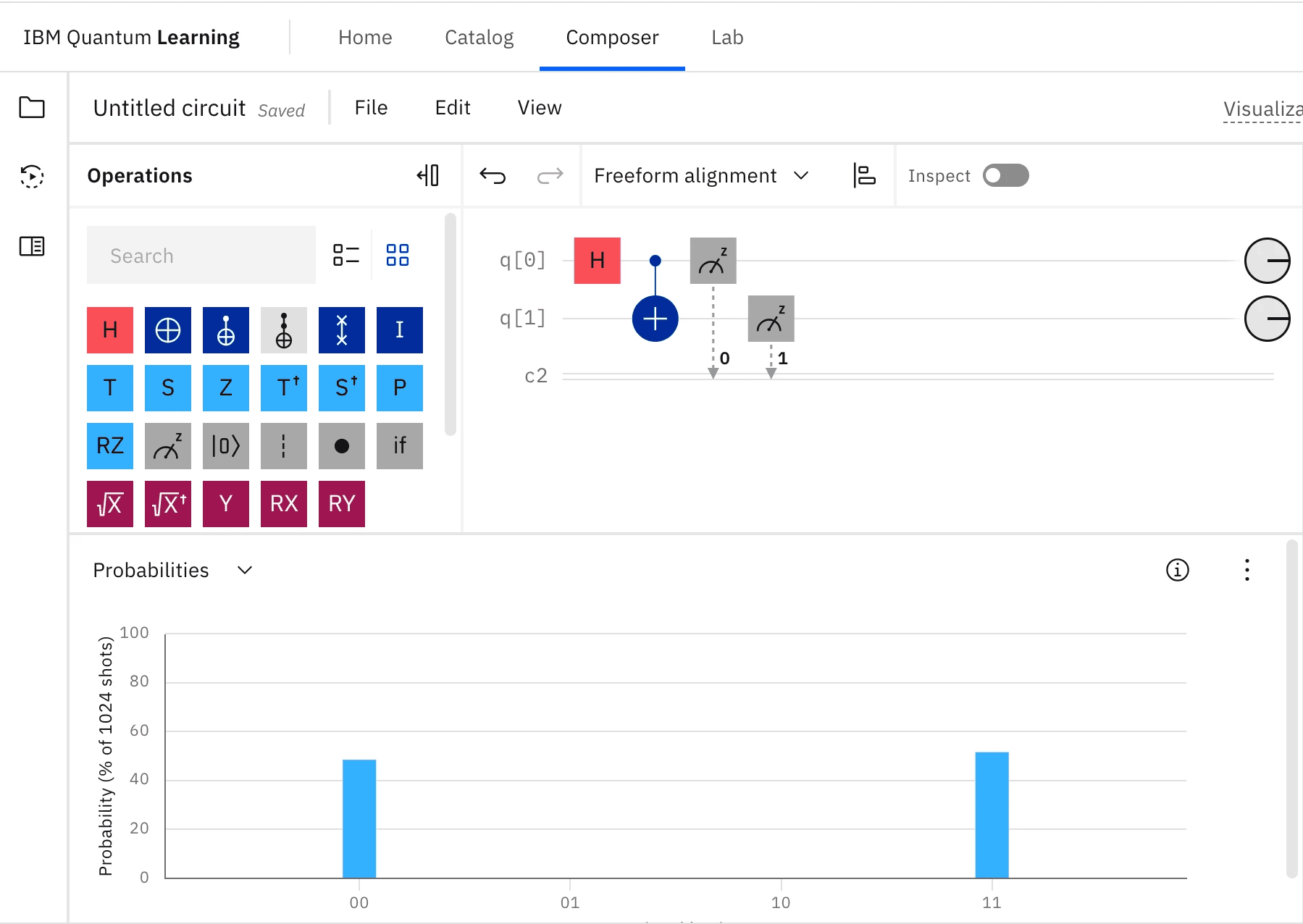
Qiskit is an open-source quantum computing framework developed by IBM that lets users build and run quantum algorithms on real quantum hardware. We used it to simulate and execute a simple algorithm repeatedly, collecting raw output data that became the foundation for visualizing how quantum noise impacts results over time.

Scroll through the page to explore personalized resources, intuitive visuals, and easy-to-use features designed to make the FAFSA process clearer and more approachable.

We began by asking how students—especially those new to computational thinking—could engage with something as abstract as quantum noise. Instead of relying on code or equations, we explored how data could become narrative, and how interaction could support understanding.
We began by asking how students—especially those new to computational thinking—could engage with something as abstract as quantum noise. Instead of relying on code or equations, we explored how data could become narrative, and how interaction could support understanding.

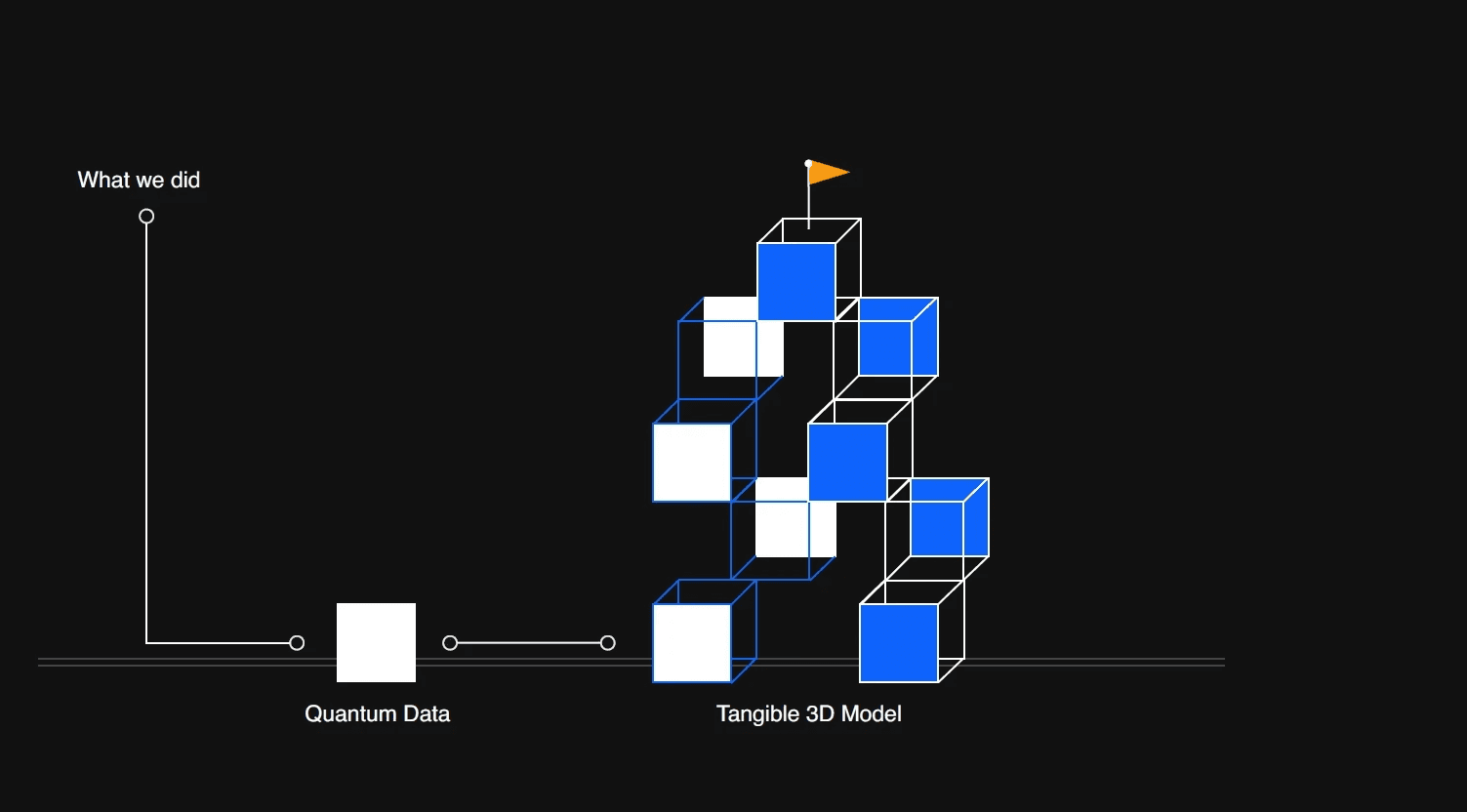
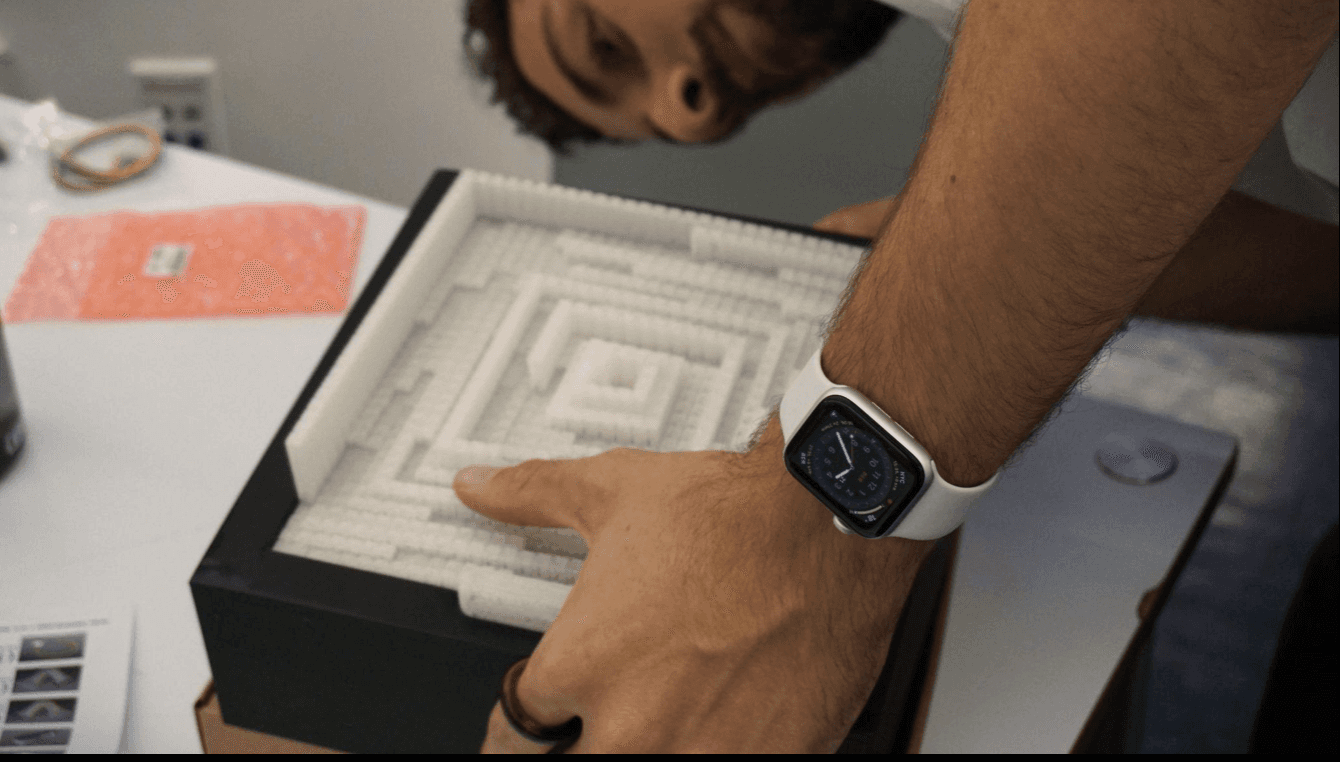
By running a simple quantum algorithm 1024 times, we captured the gap between ideal results and noisy realities—an abstract concept made visible through layered error patterns. We transformed this data into a spiral model that students could touch, rotate, and explore, turning statistical noise into something tangible. This hands-on approach helped spark discussion and build intuition around quantum error, reliability, and uncertainty.

To support teachers in explaining these concepts, we created a simple animation that breaks down the algorithm step by step, showing how quantum noise alters expected outcomes. This visual aid helps bridge the gap between abstract theory and hands-on exploration, giving educators a clear starting point for classroom discussion. Paired with the spiral model, the animation makes it easier for students to connect the science to what they’re seeing and touching.

This project is not just conceptual, we used a real quantum computer to run a basic algorithm and collect live data. Using that dataset, Max (my collaborator) developed a custom Grasshopper cluster to analyze quantum noise and generate values that shape geometry. This let us explore how quantum behavior could be experienced through form, not just explained. The result is a set of spatial patterns students can see, touch, and learn from.
Together, we developed an interactive website using Spline to visualize quantum noise as smooth, dynamic forms shaped by spline curves. The site mirrors our physical models and offers students a playful way to explore complex systems. We pitched it at IBM Labs and were selected to exhibit the project at Microscope Gallery in New York City.