Transborder Education Tool: Buzz Beyond Borders
Transborder Education Tool: Buzz Beyond Borders
Transborder Education Tool: Buzz Beyond Borders

year
2024-2025
Role
Lead Strategist & Visual Designer
timeframe
6 months
tools
Probes, Stakeholder Mapping, Interactive Data Visualization, and Public Installation
Team
Skylar Wang & Ariana Ames
Every day, over 39,000 transborder students cross from Mexico into the United States for school, yet their experiences remain largely invisible in policy and design conversations. In San Luis Río Colorado, a small but vital border town, few institutional resources exist to support these students. Buzz Beyond Borders, a binational initiative led by transborder students, uses participatory design and analog storytelling to surface their voices and collective narratives. Designed as a scalable civic tool and public intervention, the project reimagines how systems can listen, respond, and build dignity-centered services. Through community-led outreach, public installations, and cross-institutional partnerships, we began bridging San Luis with stronger networks in cities like Tijuana, the world's busiest border crossing, fostering collaborative infrastructure and future policy dialogue rooted in lived experience.
?
How might we?
How might we create an iterative playground for community engagement that amplifies the unheard voices of transborder students, transforming public perception while building networks of support for students, families, educators, and policymakers across national boundaries?
Intervention
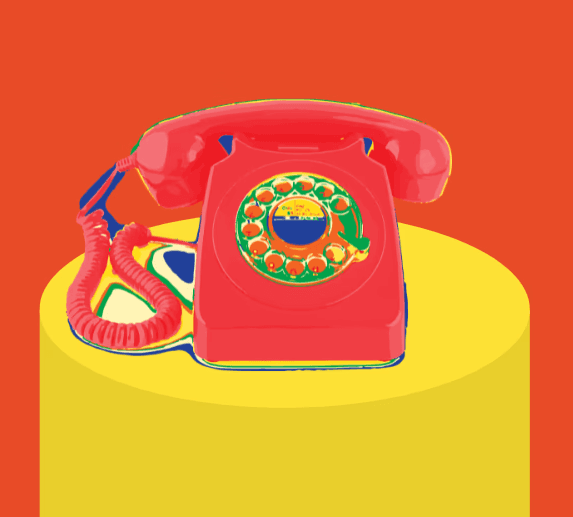
A simple phone becomes a tool for collective documentation, inviting transborder students, families, and educators to record and listen to stories of daily border-crossing life. The project surfaces overlooked realities that even students themselves may not fully recognize, spotlighting a niche yet widespread population. With permission, the retrieved narratives informed the creation of maps, visual communication pieces, and participatory games. These outputs, along with the stories, were activated through exhibitions, workshops, and panels.
How might we?
How might we create an iterative playground for community engagement that amplifies the unheard voices of transborder students, transforming public perception while building networks of support for students, families, educators, and policymakers across national boundaries?
Intervention
A simple phone becomes a tool for collective documentation, inviting transborder students, families, and educators to record and listen to stories of daily border-crossing life. The project surfaces overlooked realities that even students themselves may not fully recognize, spotlighting a niche yet widespread population. With permission, the retrieved narratives informed the creation of maps, visual communication pieces, and participatory games. These outputs, along with the stories, were activated through exhibitions, workshops, and panels.
How might we?
How might we create an iterative playground for community engagement that amplifies the unheard voices of transborder students, transforming public perception while building networks of support for students, families, educators, and policymakers across national boundaries?
Intervention
A simple phone becomes a tool for collective documentation, inviting transborder students, families, and educators to record and listen to stories of daily border-crossing life. The project surfaces overlooked realities that even students themselves may not fully recognize, spotlighting a niche yet widespread population. With permission, the retrieved narratives informed the creation of maps, visual communication pieces, and participatory games. These outputs, along with the stories, were activated through exhibitions, workshops, and panels.
How might we?
How might we create an iterative playground for community engagement that amplifies the unheard voices of transborder students, transforming public perception while building networks of support for students, families, educators, and policymakers across national boundaries?
Intervention
A simple phone becomes a tool for collective documentation, inviting transborder students, families, and educators to record and listen to stories of daily border-crossing life. The project surfaces overlooked realities that even students themselves may not fully recognize, spotlighting a niche yet widespread population. With permission, the retrieved narratives informed the creation of maps, visual communication pieces, and participatory games. These outputs, along with the stories, were activated through exhibitions, workshops, and panels.
?
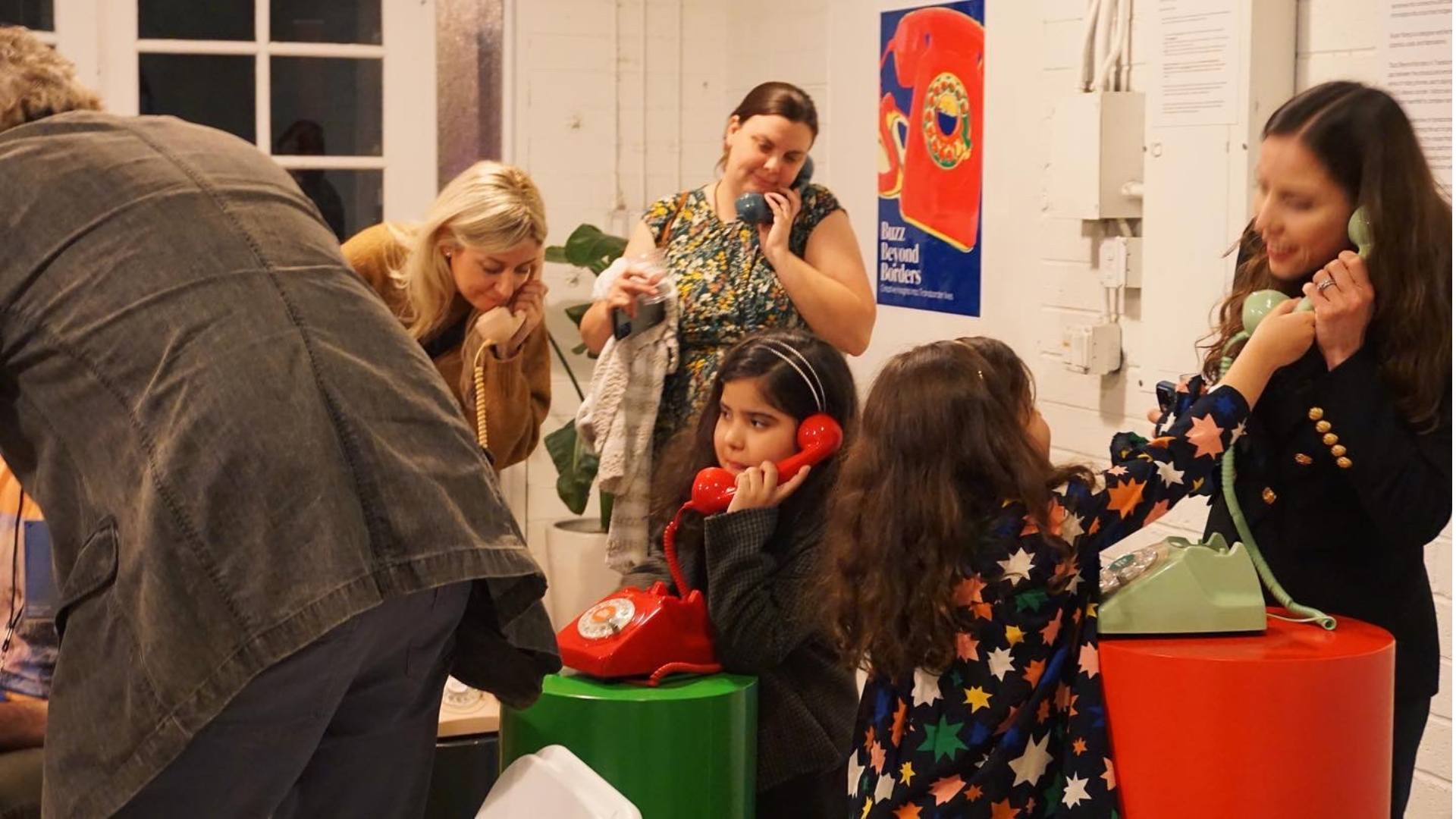
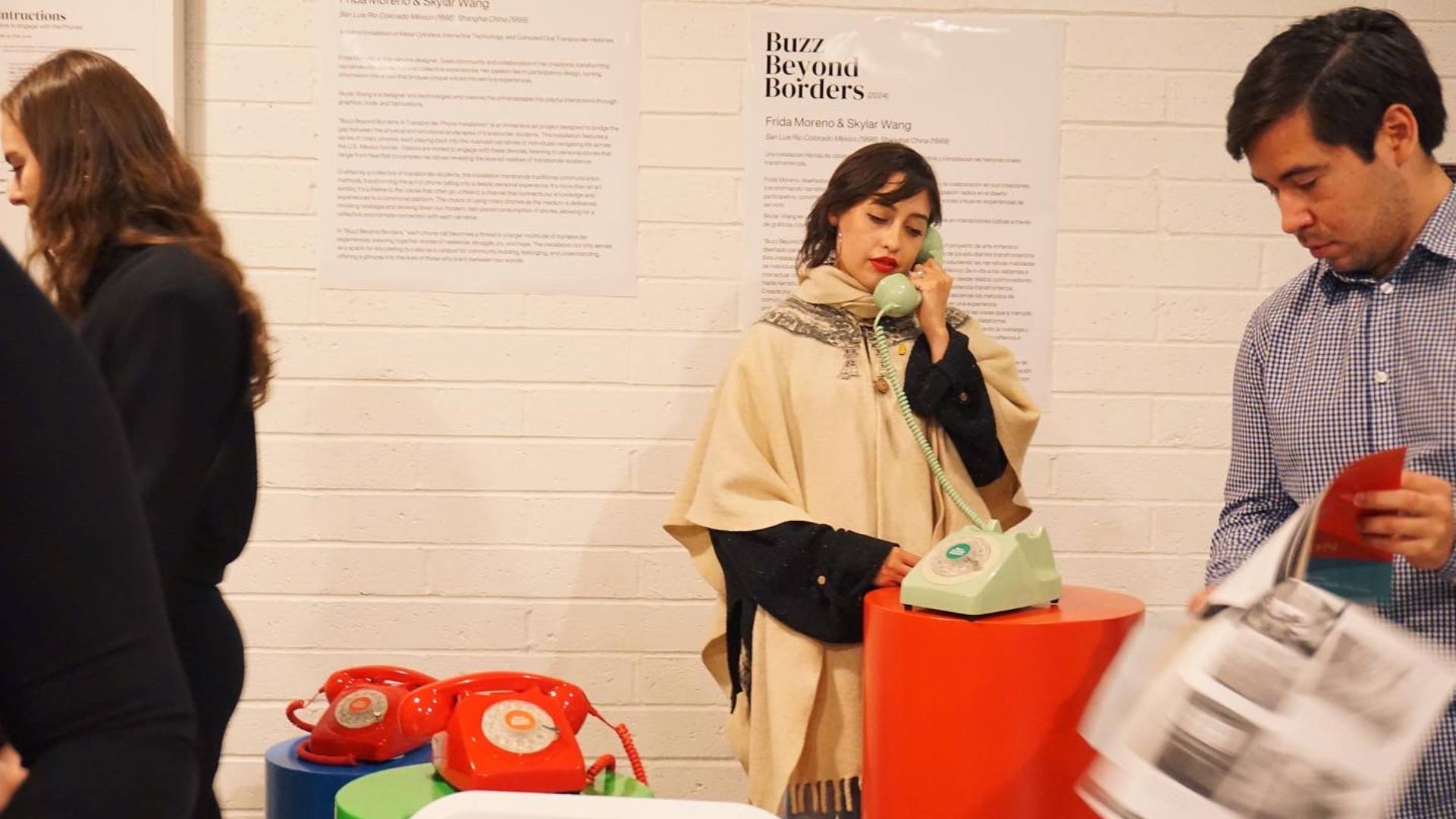
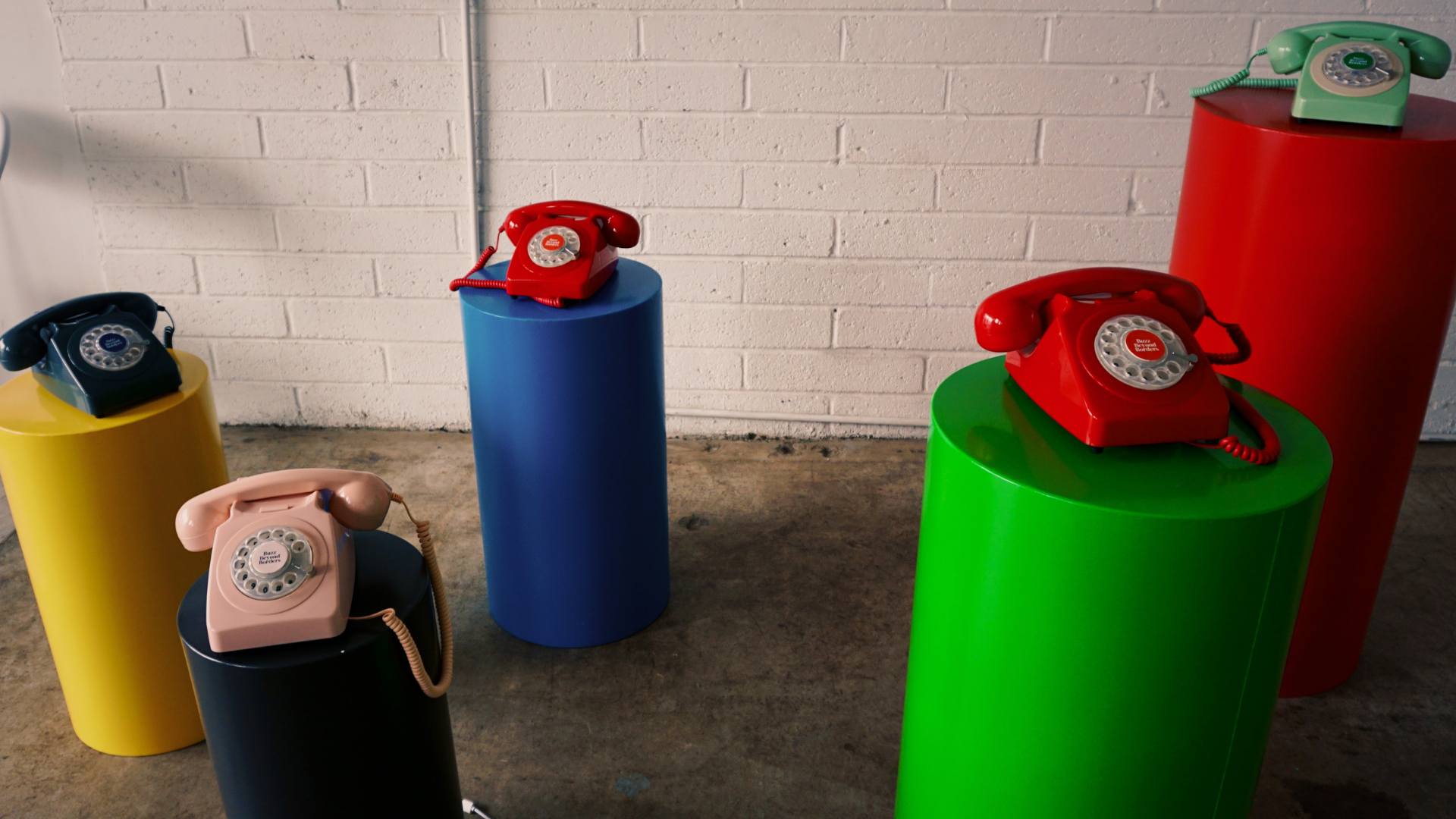
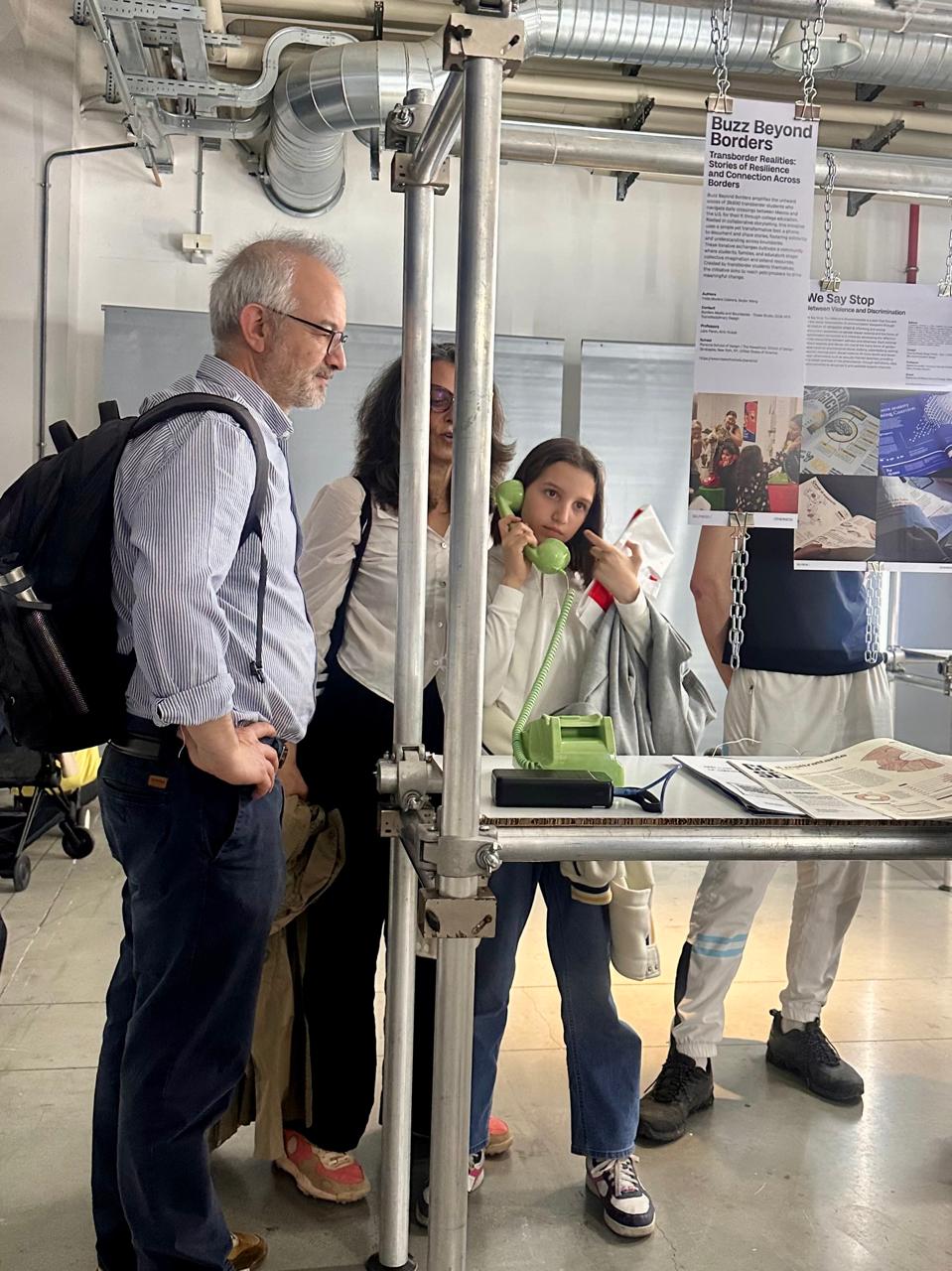
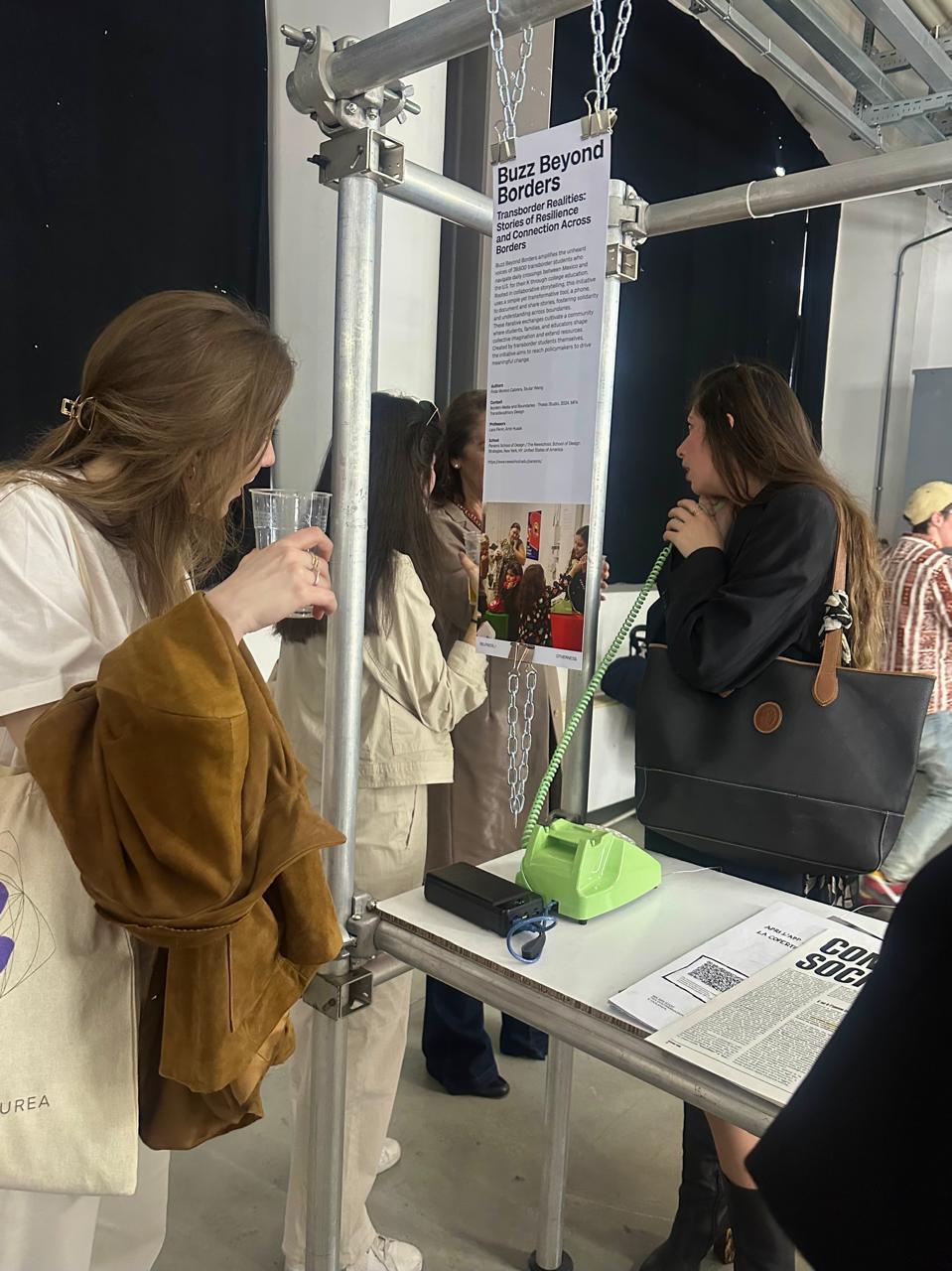
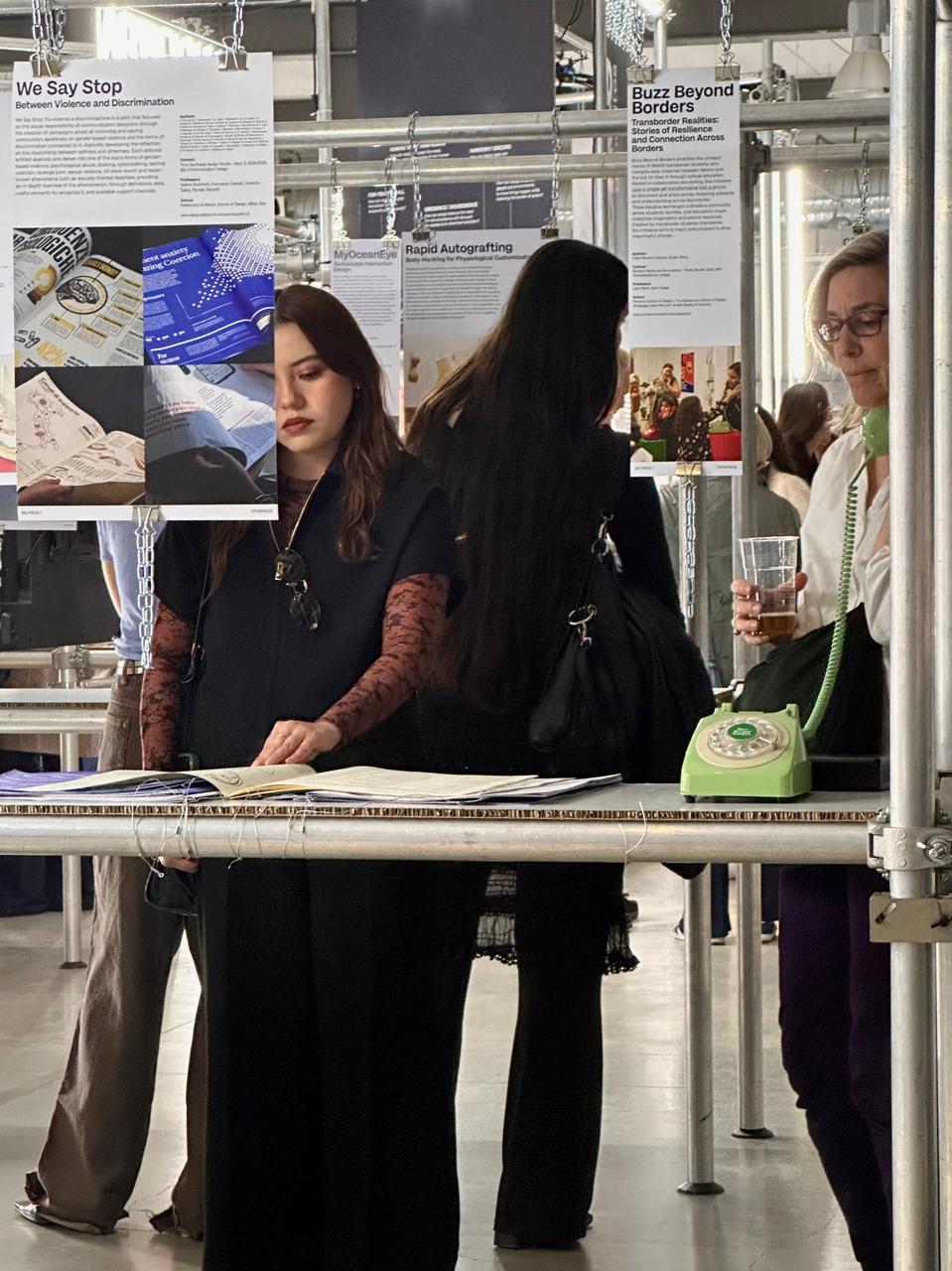
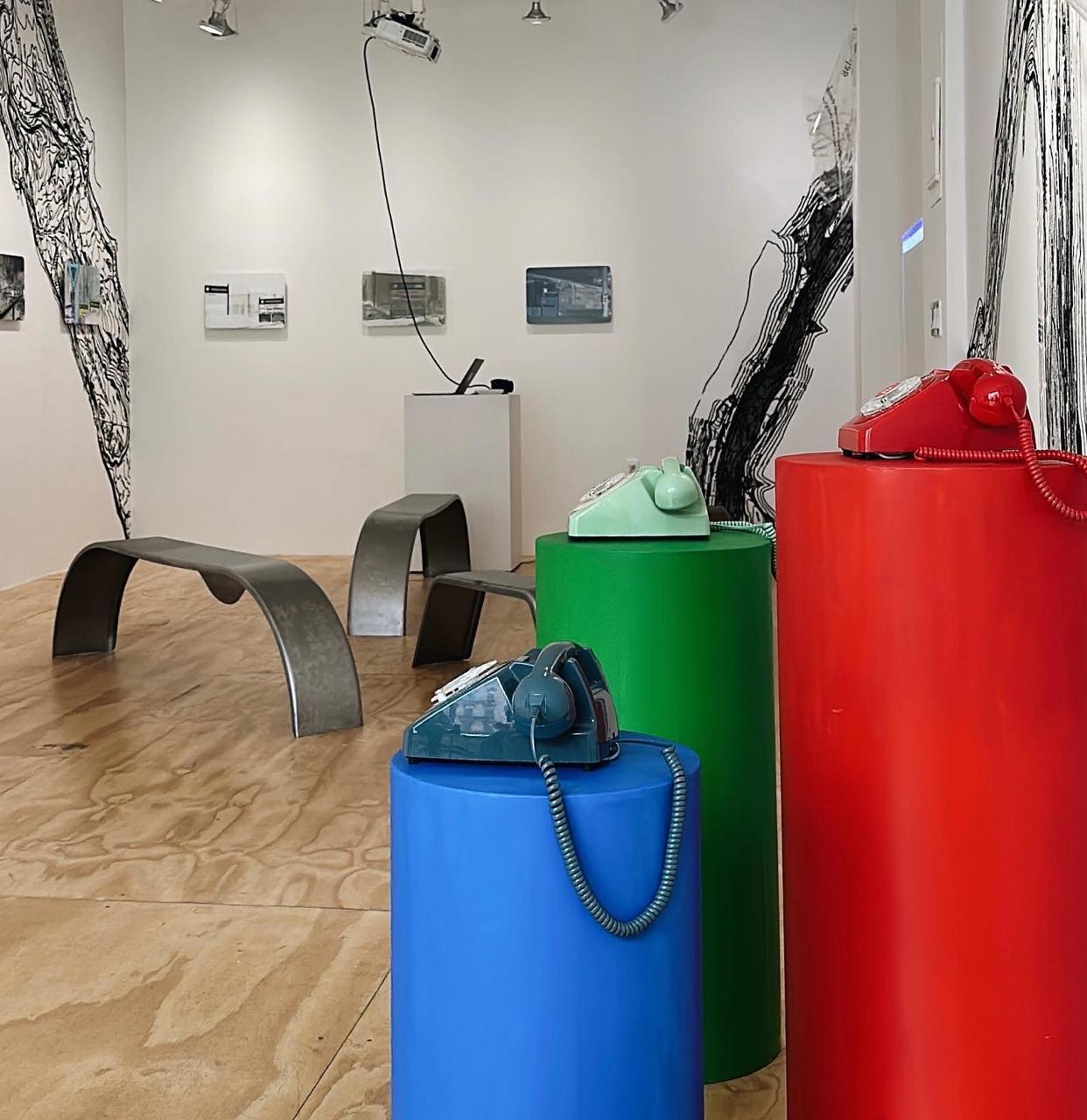
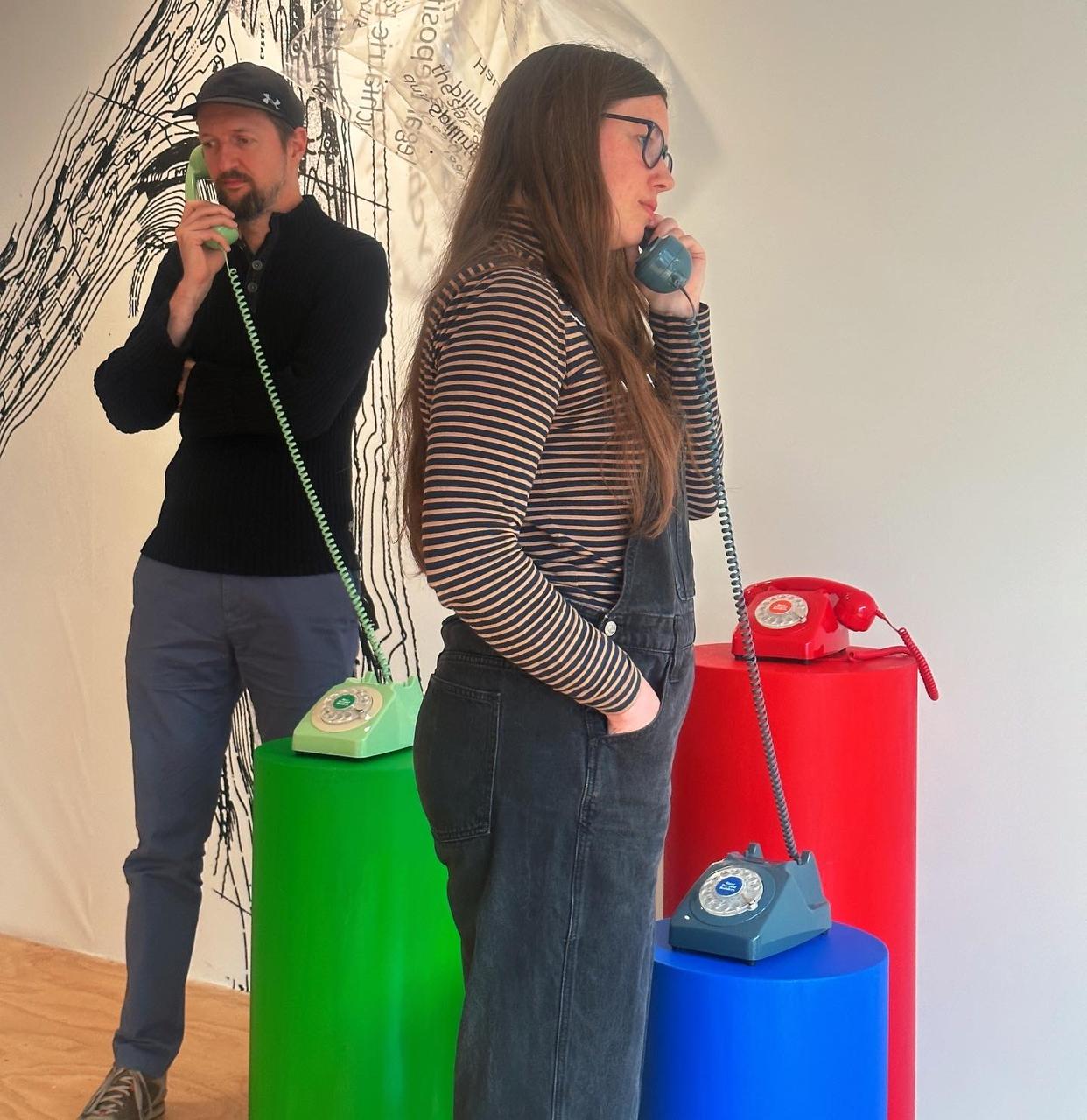
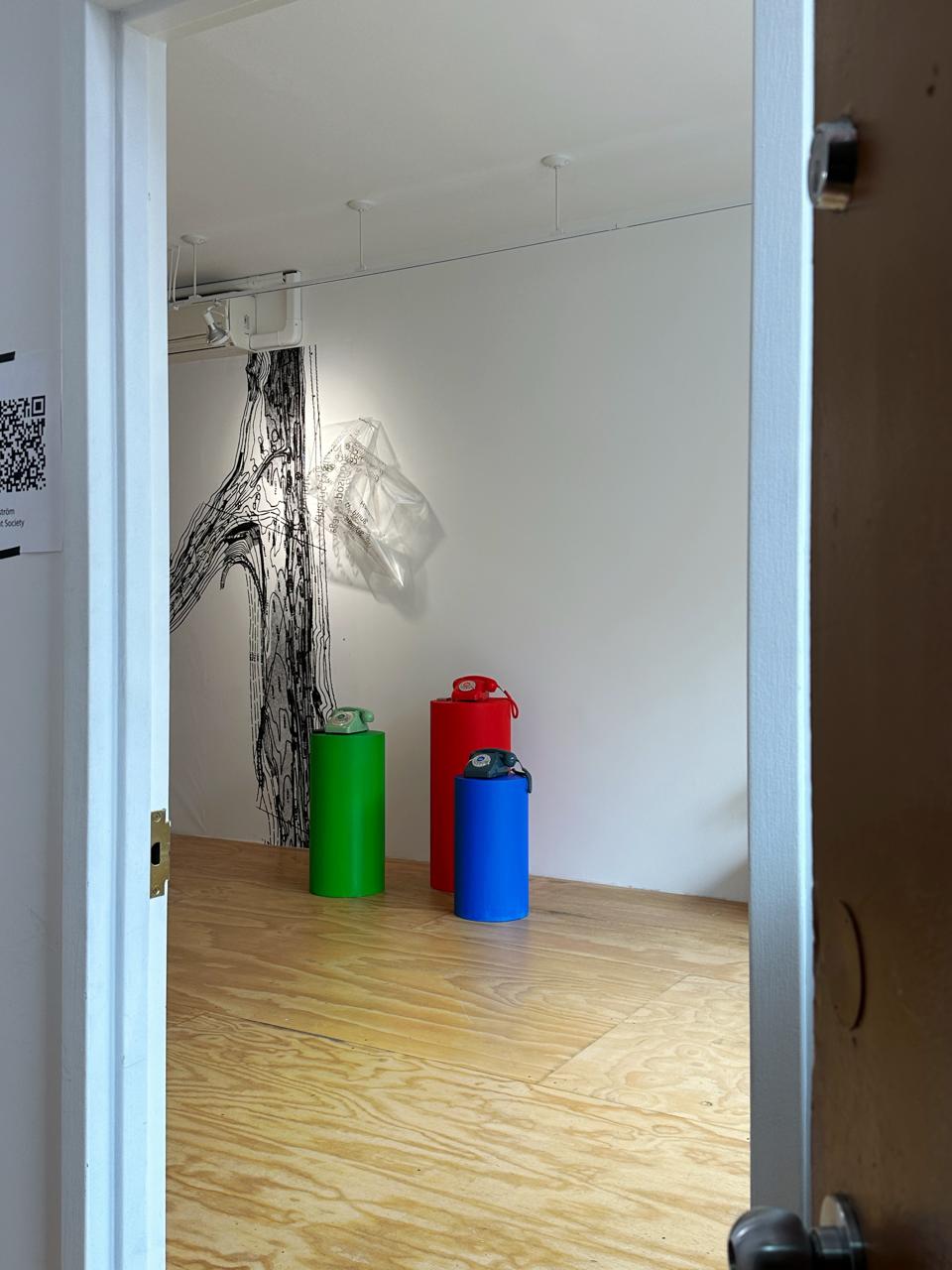
Buzz Beyond Borders is an immersive project designed to bridge the gap between the physical and emotional landscapes of transborder students. This installation features a series of rotary phones, each playing back into the nuanced narratives of individuals navigating life across the U.S.-Mexico border. Visitors are invited to engage with these devices, listening to personal stories that range from heartfelt, joyful and complex narratives revealing the layered realities of transborder existence.
Buzz Beyond Borders is an immersive project designed to bridge the gap between the physical and emotional landscapes of transborder students. This installation features a series of rotary phones, each playing back into the nuanced narratives of individuals navigating life across the U.S.-Mexico border. Visitors are invited to engage with these devices, listening to personal stories that range from heartfelt, joyful and complex narratives revealing the layered realities of transborder existence.
Buzz Beyond Borders is an immersive project designed to bridge the gap between the physical and emotional landscapes of transborder students. This installation features a series of rotary phones, each playing back into the nuanced narratives of individuals navigating life across the U.S.-Mexico border. Visitors are invited to engage with these devices, listening to personal stories that range from heartfelt, joyful and complex narratives revealing the layered realities of transborder existence.
Buzz Beyond Borders is an immersive project designed to bridge the gap between the physical and emotional landscapes of transborder students. This installation features a series of rotary phones, each playing back into the nuanced narratives of individuals navigating life across the U.S.-Mexico border. Visitors are invited to engage with these devices, listening to personal stories that range from heartfelt, joyful and complex narratives revealing the layered realities of transborder existence.
We focused on civic service interventions to enhance transborder community support, foster a broader understanding of our community's needs, and consolidate our voices in a broader network. This consolidation aims to break through public policy, education, and expand our network collaborations, thereby producing quality work through transdisciplinary praxis. By improving communication among stakeholders, we promote solidarity rather than empathy, driving real future change and opening dialogue for political imagination and a future for our transborder community.
We focused on civic service interventions to enhance transborder community support, foster a broader understanding of our community's needs, and consolidate our voices in a broader network. This consolidation aims to break through public policy, education, and expand our network collaborations, thereby producing quality work through transdisciplinary praxis. By improving communication among stakeholders, we promote solidarity rather than empathy, driving real future change and opening dialogue for political imagination and a future for our transborder community.
We focused on civic service interventions to enhance transborder community support, foster a broader understanding of our community's needs, and consolidate our voices in a broader network. This consolidation aims to break through public policy, education, and expand our network collaborations, thereby producing quality work through transdisciplinary praxis. By improving communication among stakeholders, we promote solidarity rather than empathy, driving real future change and opening dialogue for political imagination and a future for our transborder community.
We focused on civic service interventions to enhance transborder community support, foster a broader understanding of our community's needs, and consolidate our voices in a broader network. This consolidation aims to break through public policy, education, and expand our network collaborations, thereby producing quality work through transdisciplinary praxis. By improving communication among stakeholders, we promote solidarity rather than empathy, driving real future change and opening dialogue for political imagination and a future for our transborder community.
Rotary Dial Phone Engagement
Rotary Dial Phone Engagement
Rotary Dial Phone Engagement
Rotary Dial Phone Engagement
Civic Service Interventions
Civic Service Interventions
Civic Service Interventions
Civic Service Interventions
Transborder Value Framework
Transborder Value Framework
Transborder Value Framework
Transborder Value Framework
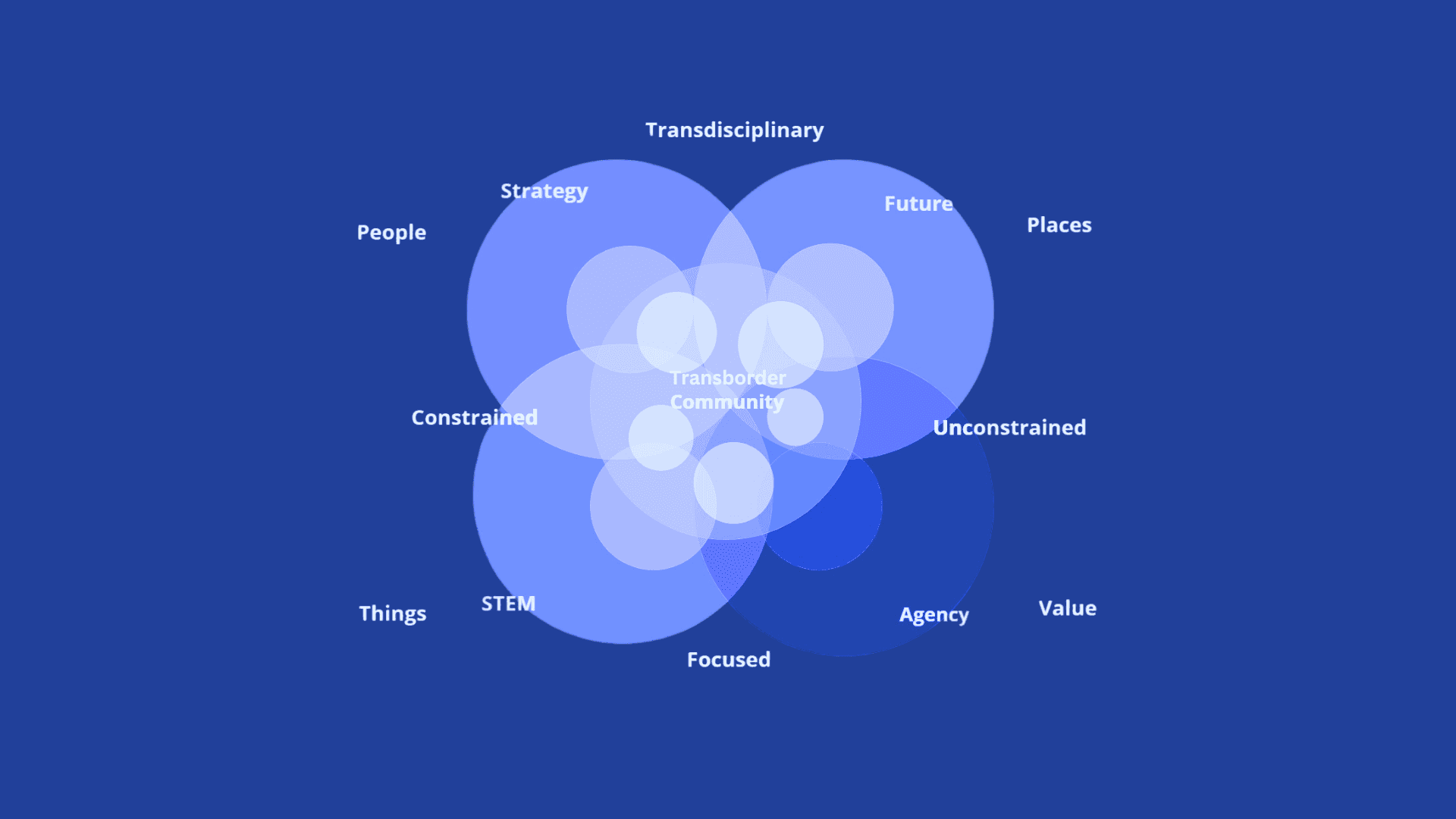
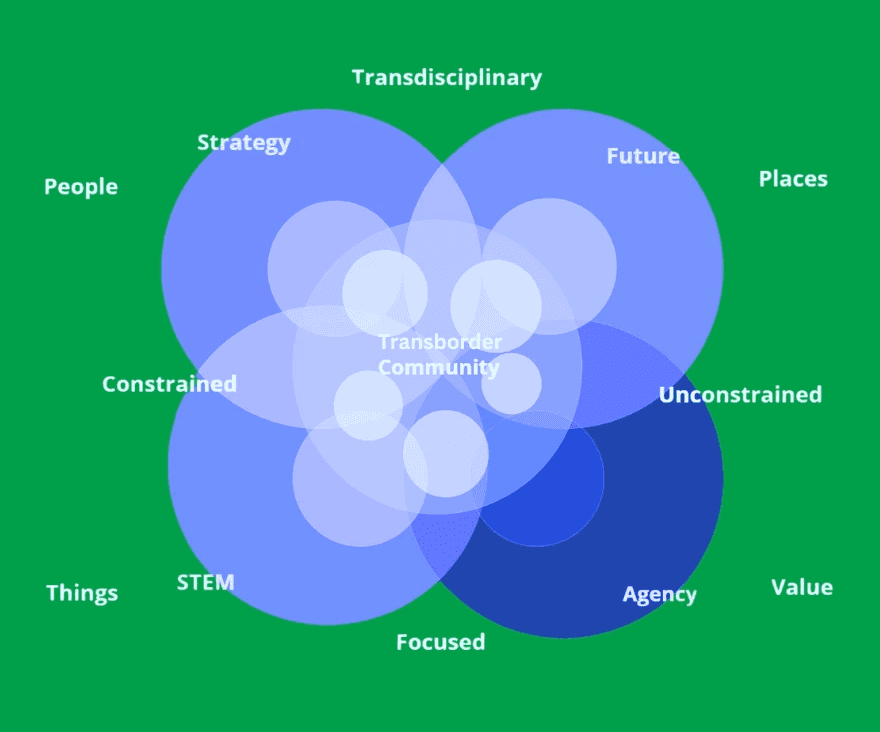
Our framework orbits around the community, underscoring the centrality of collective identity and shared experiences. It's a recognition of the power of community as the nucleus of change, where individual narratives weave a collective story, driving the impetus for policy reform and educational innovation.
Our framework orbits around the community, underscoring the centrality of collective identity and shared experiences. It's a recognition of the power of community as the nucleus of change, where individual narratives weave a collective story, driving the impetus for policy reform and educational innovation.
Our framework orbits around the community, underscoring the centrality of collective identity and shared experiences. It's a recognition of the power of community as the nucleus of change, where individual narratives weave a collective story, driving the impetus for policy reform and educational innovation.
Our framework orbits around the community, underscoring the centrality of collective identity and shared experiences. It's a recognition of the power of community as the nucleus of change, where individual narratives weave a collective story, driving the impetus for policy reform and educational innovation.
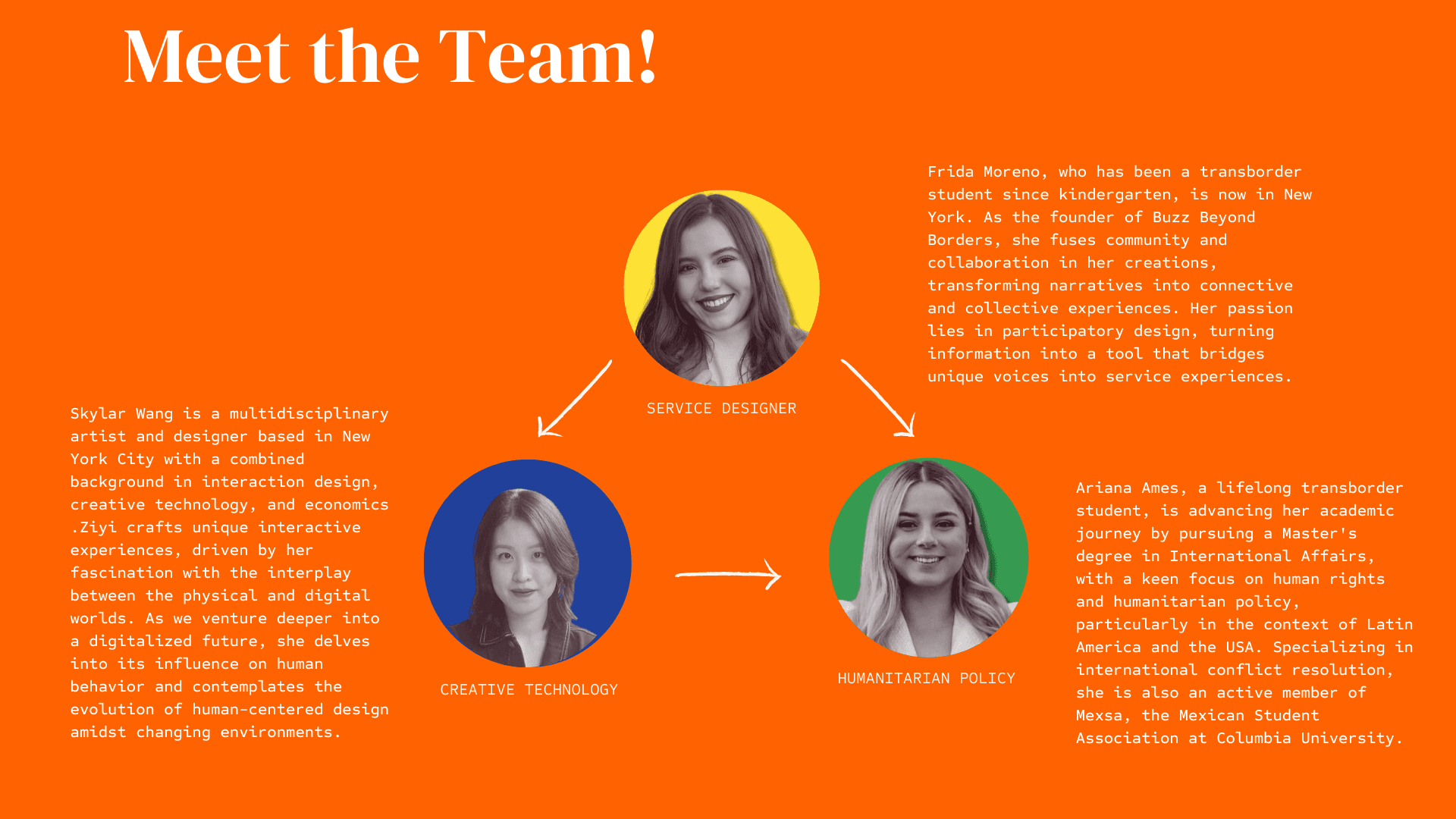
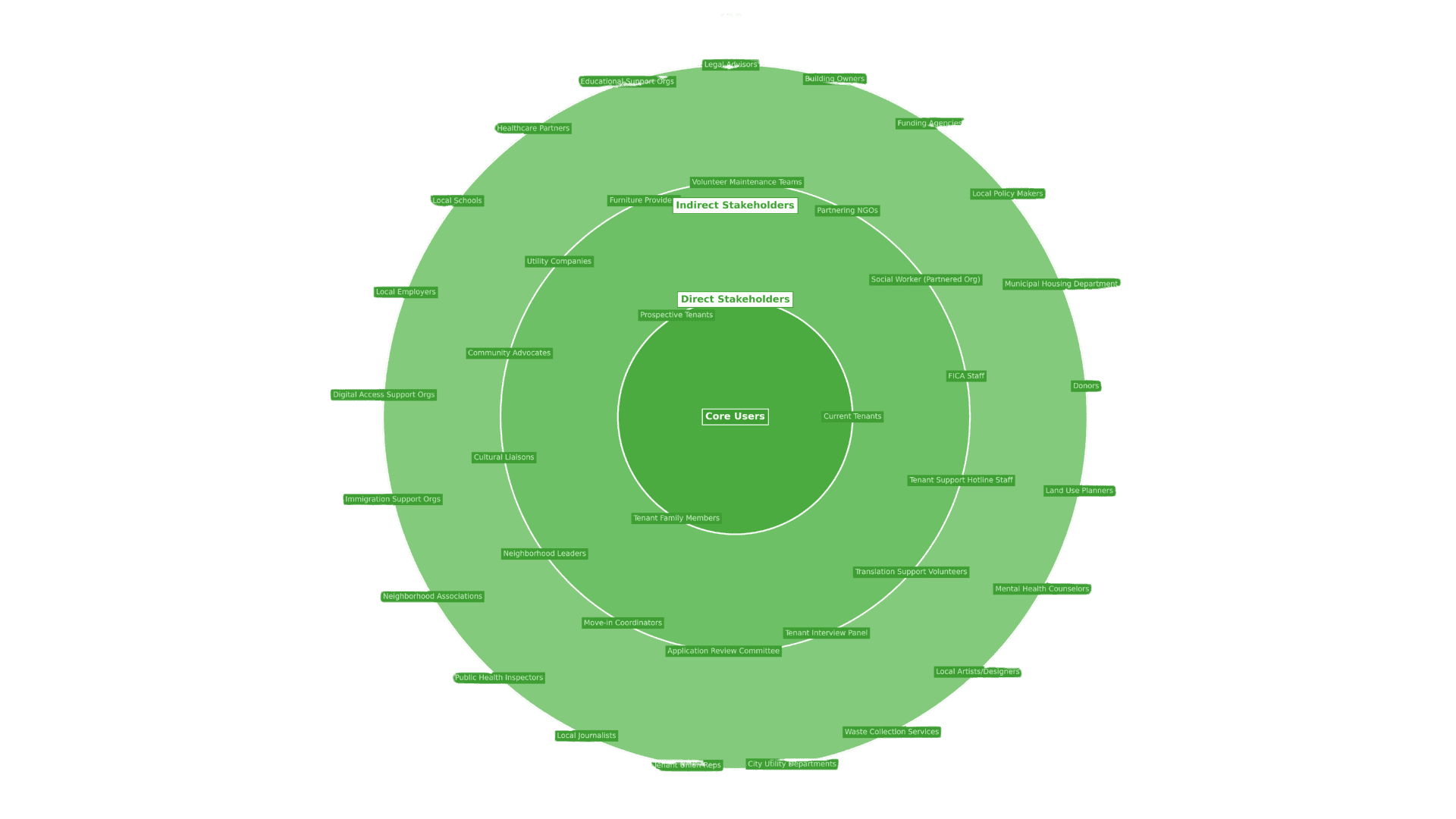
The Buzz Beyond Borders team is led by three core members, including two transborder students who were raised along the U.S.–Mexico border and bring lived experience to the heart of the work. The team collaborated and co-created with key actors from institutions such as the Transborder Institute, Transborder Scholars, and the Mexican Student Association at Columbia University to expand the project's reach and impact for cross-border education, policy dialogue, and community empowerment.
Scroll through the page to explore personalized resources, intuitive visuals, and easy-to-use features designed to make the FAFSA process clearer and more approachable.
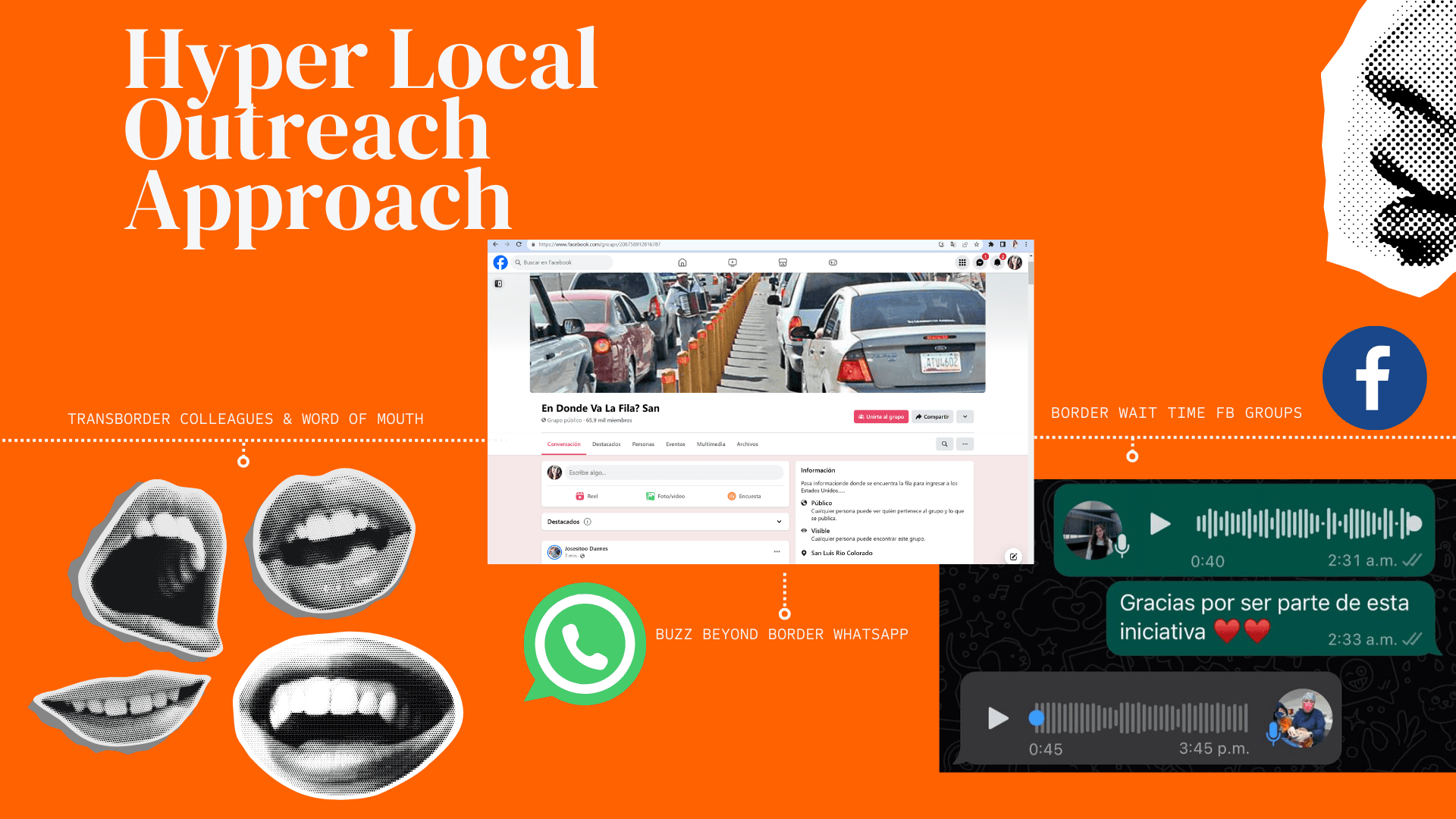
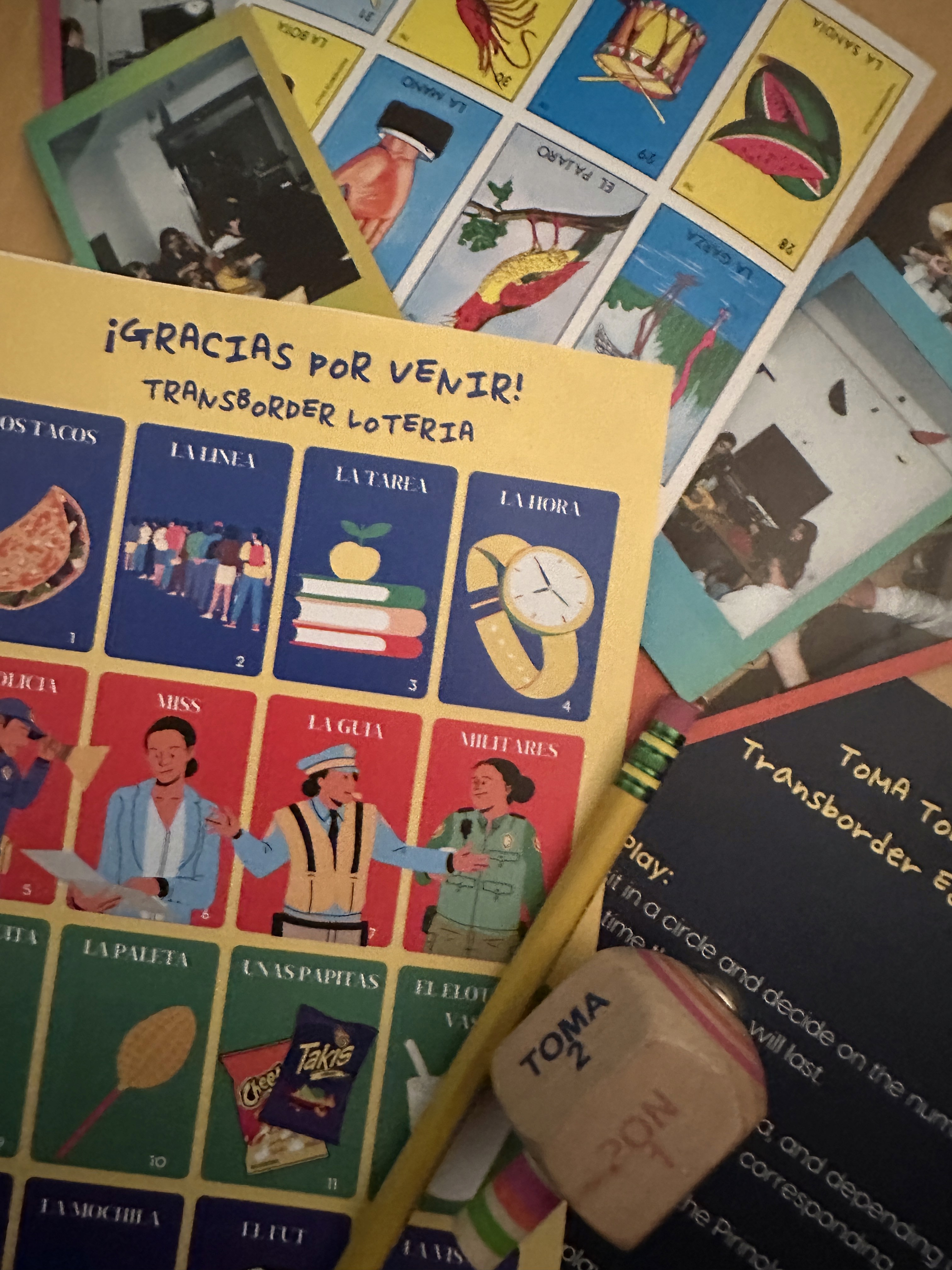
In our initial outreach, we used a Facebook page, commonly checked for border wait times, to reach transborder families. Through this familiar space and personal connections, we invited participants to share their stories using our rotary dial phone.
In our initial outreach, we used a Facebook page, commonly checked for border wait times, to reach transborder families. Through this familiar space and personal connections, we invited participants to share their stories using our rotary dial phone.
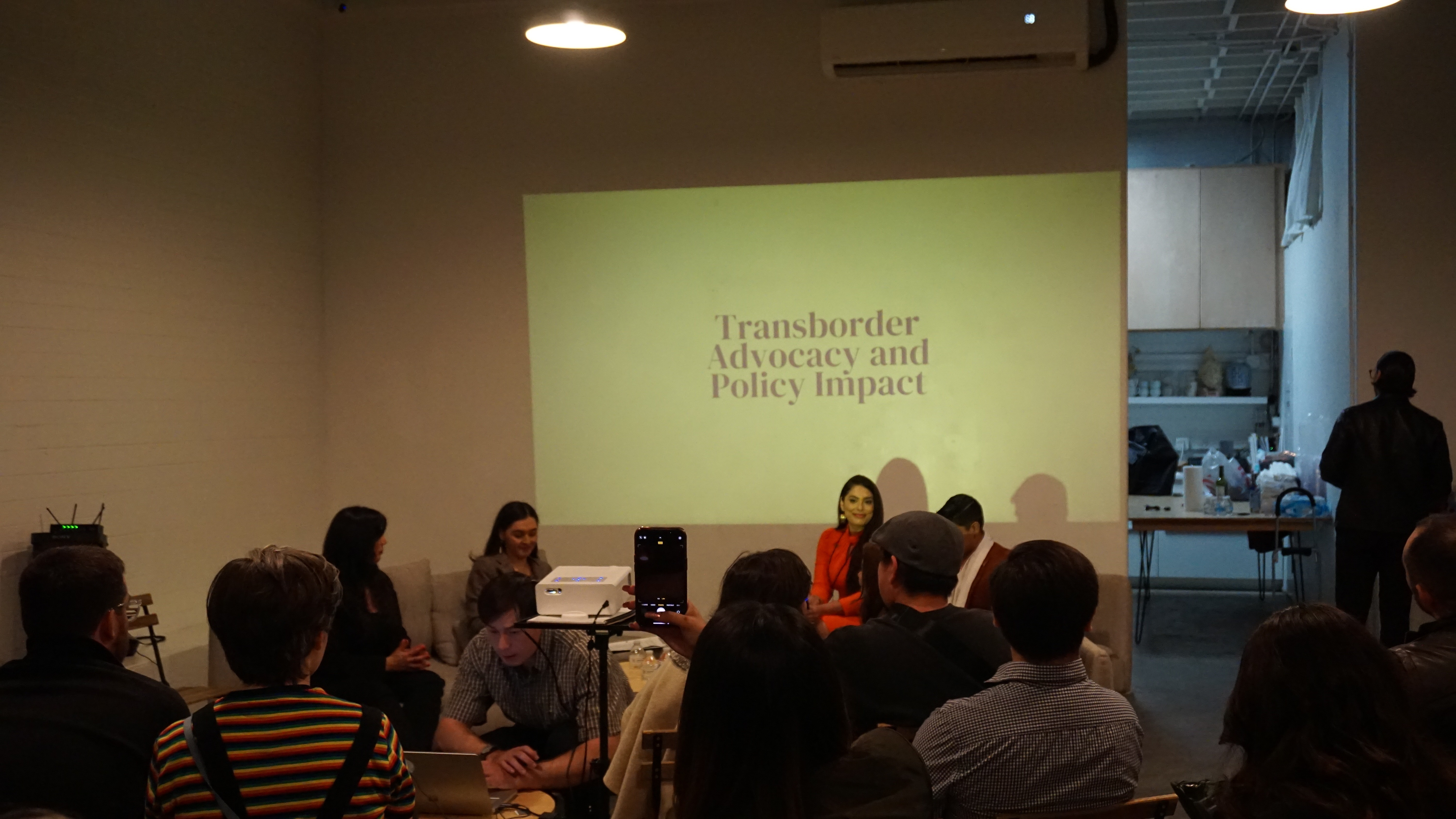
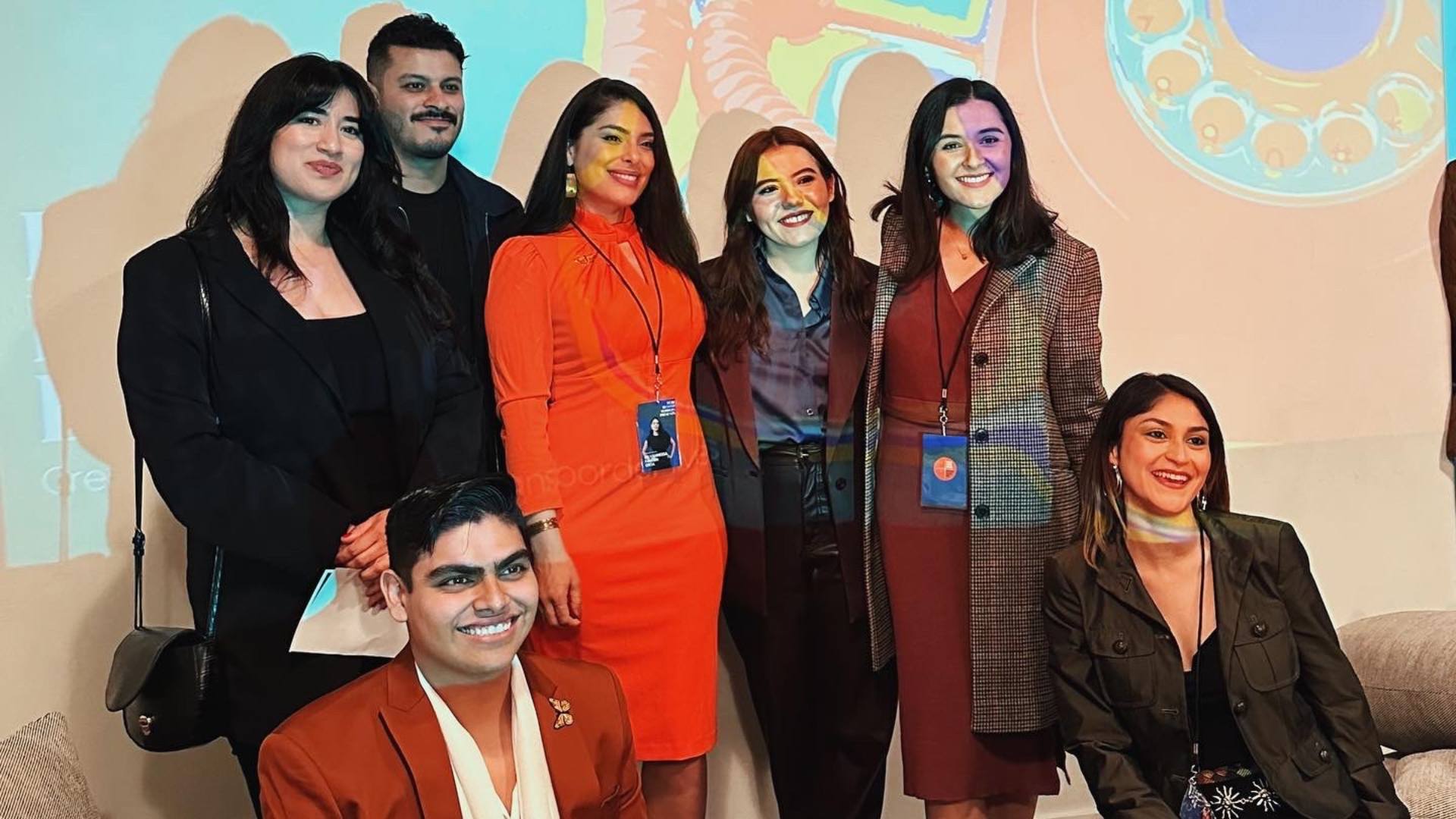
Vanessa Falcón speaks as a panelist during the Buzz Beyond Borders intervention, sharing her expertise as a leading voice in transborder education and student advocacy. Her presence highlights the importance of centering lived experience in shaping equitable border policy.
Vanessa Falcón speaks as a panelist during the Buzz Beyond Borders intervention, sharing her expertise as a leading voice in transborder education and student advocacy. Her presence highlights the importance of centering lived experience in shaping equitable border policy.
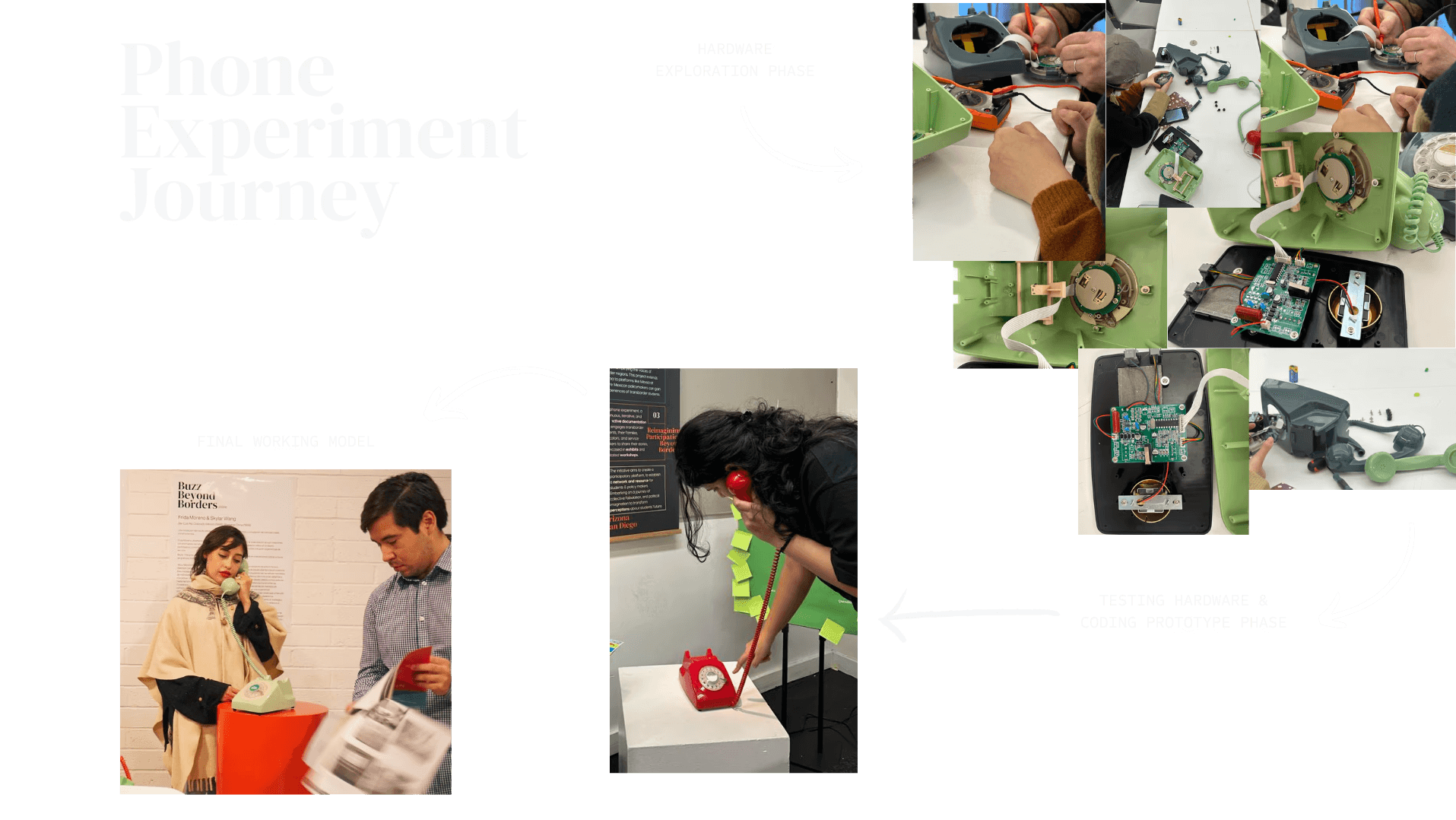
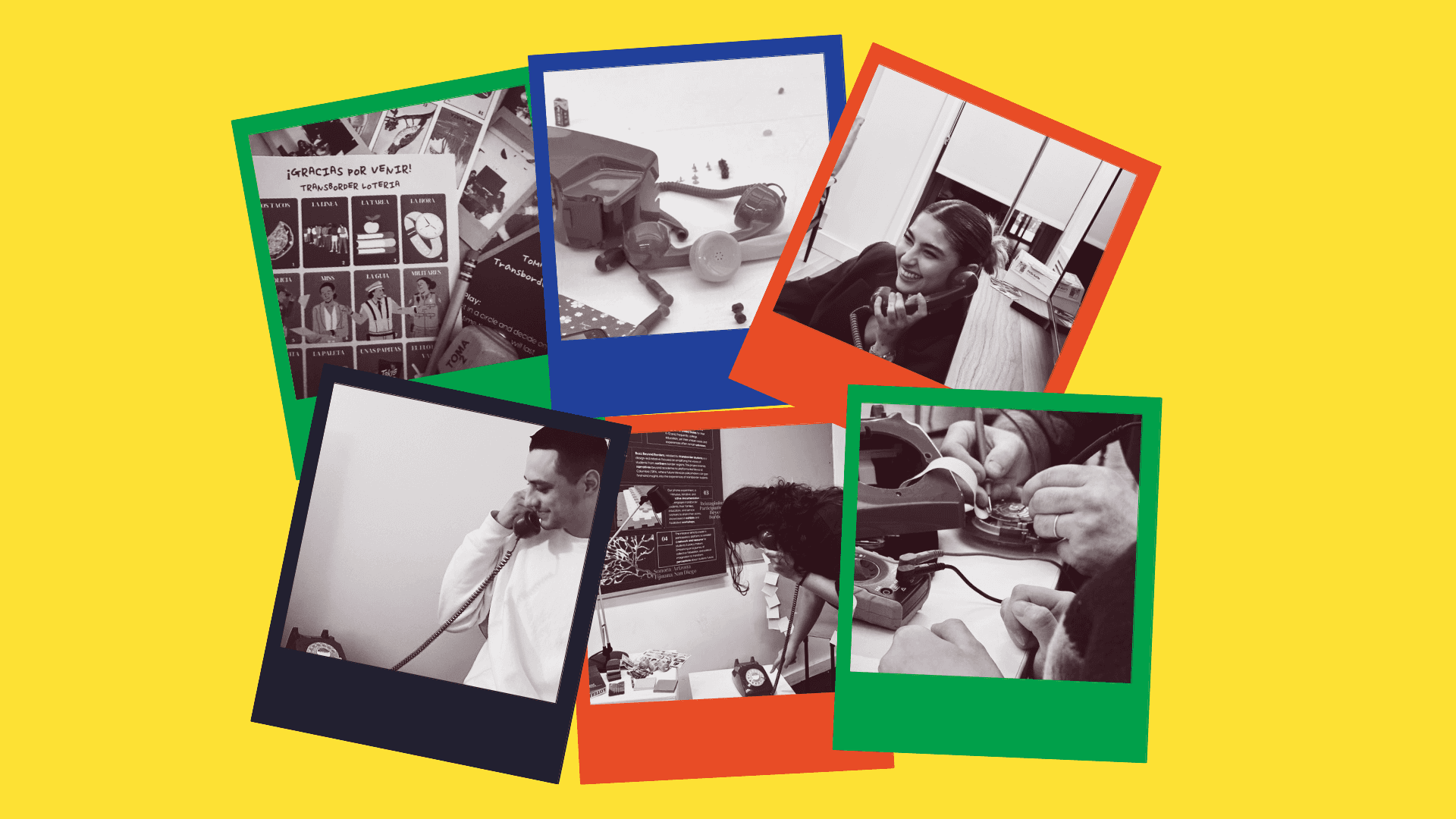
Take a look into the iterative coding and hardware hack that transformed a rotary phone into an interactive storytelling tool, allowing users to hear a welcome message and choose to leave or listen to a story.
This video showcases how the rotary phone interaction works live, focusing on a small, curated selection of narratives from San Luis Río Colorado. It highlights students who crossed the border during a shared timeframe between 2007 and 2017. Though the testimonies come from different individuals, the stories reveal a collective thread of experience, uncovering patterns of resilience, routine, and systemic challenges common to transborder life.
This video showcases how the rotary phone interaction works live, focusing on a small, curated selection of narratives from San Luis Río Colorado. It highlights students who crossed the border during a shared timeframe between 2007 and 2017. Though the testimonies come from different individuals, the stories reveal a collective thread of experience, uncovering patterns of resilience, routine, and systemic challenges common to transborder life.
(Click here to interact with Data)
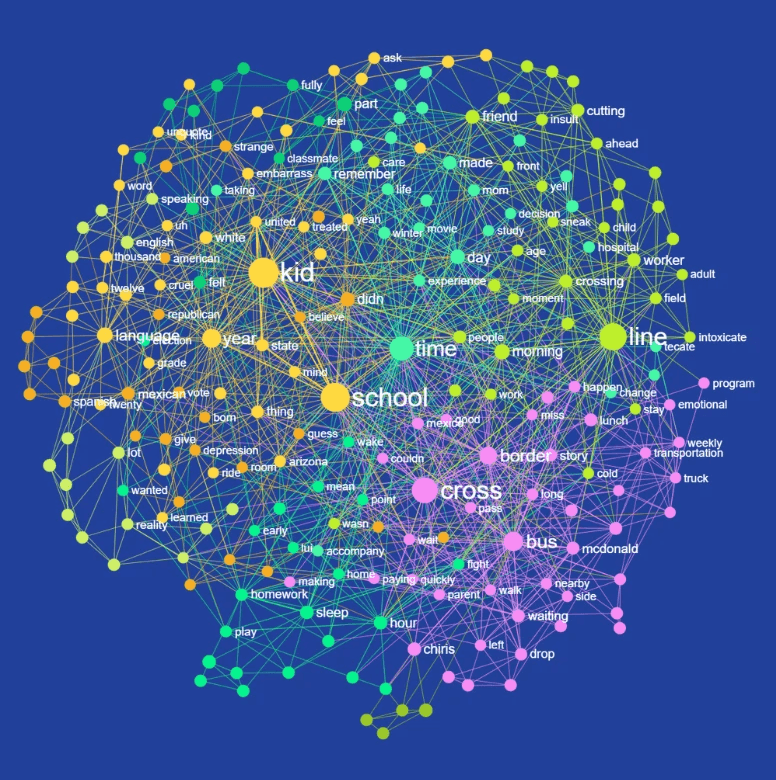
With the development of data visualization tools, we applied network analysis to 270 transborder student testimonies, converting qualitative narratives into structured graph data. Each concept was mapped as a node, with connections representing frequency and contextual relationships. This method enabled the identification of key topics, thematic clusters, and structural gaps. It provided an objective, system-level view of transborder student experiences, surfacing insights to inform policy and design interventions.
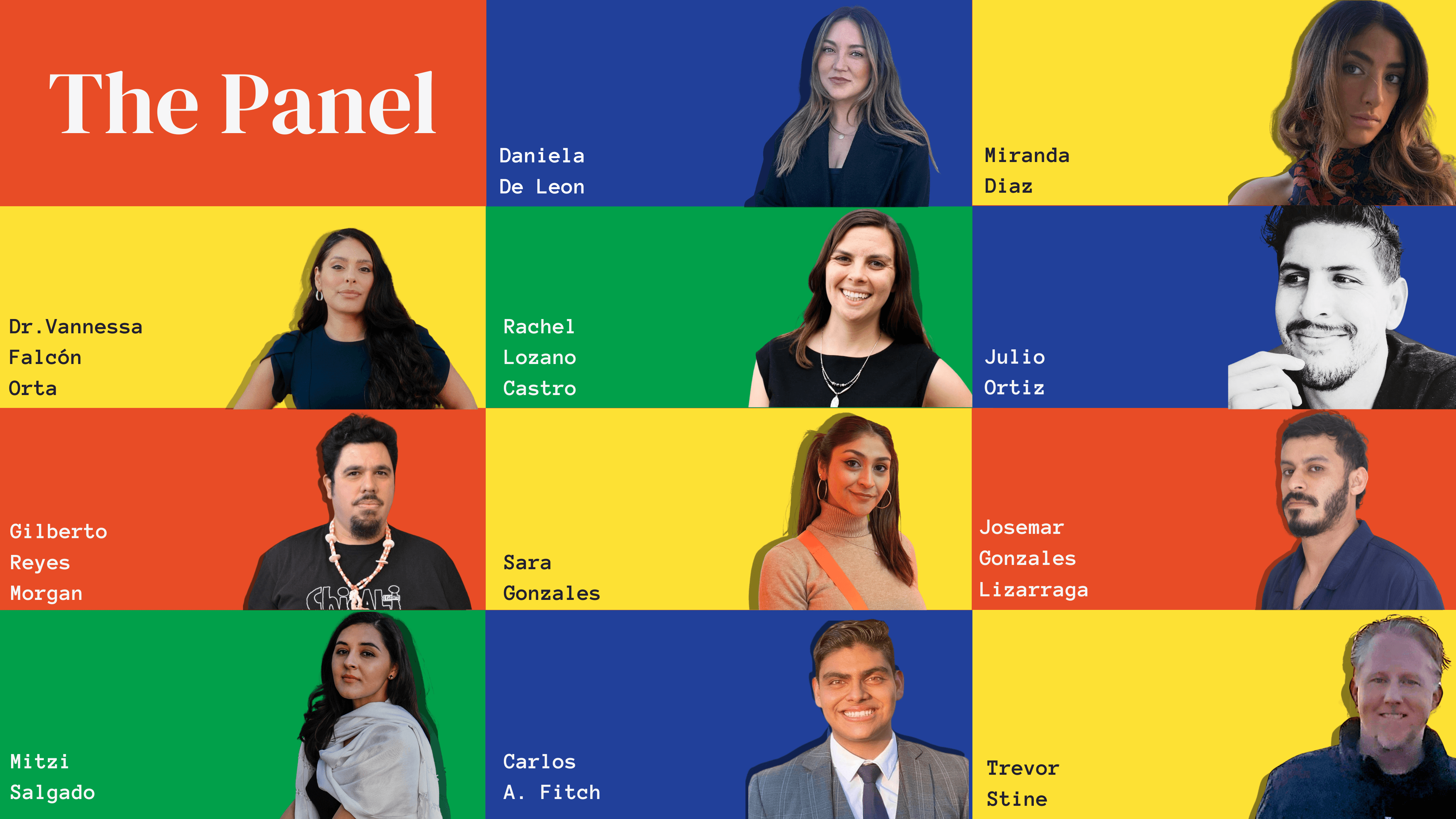
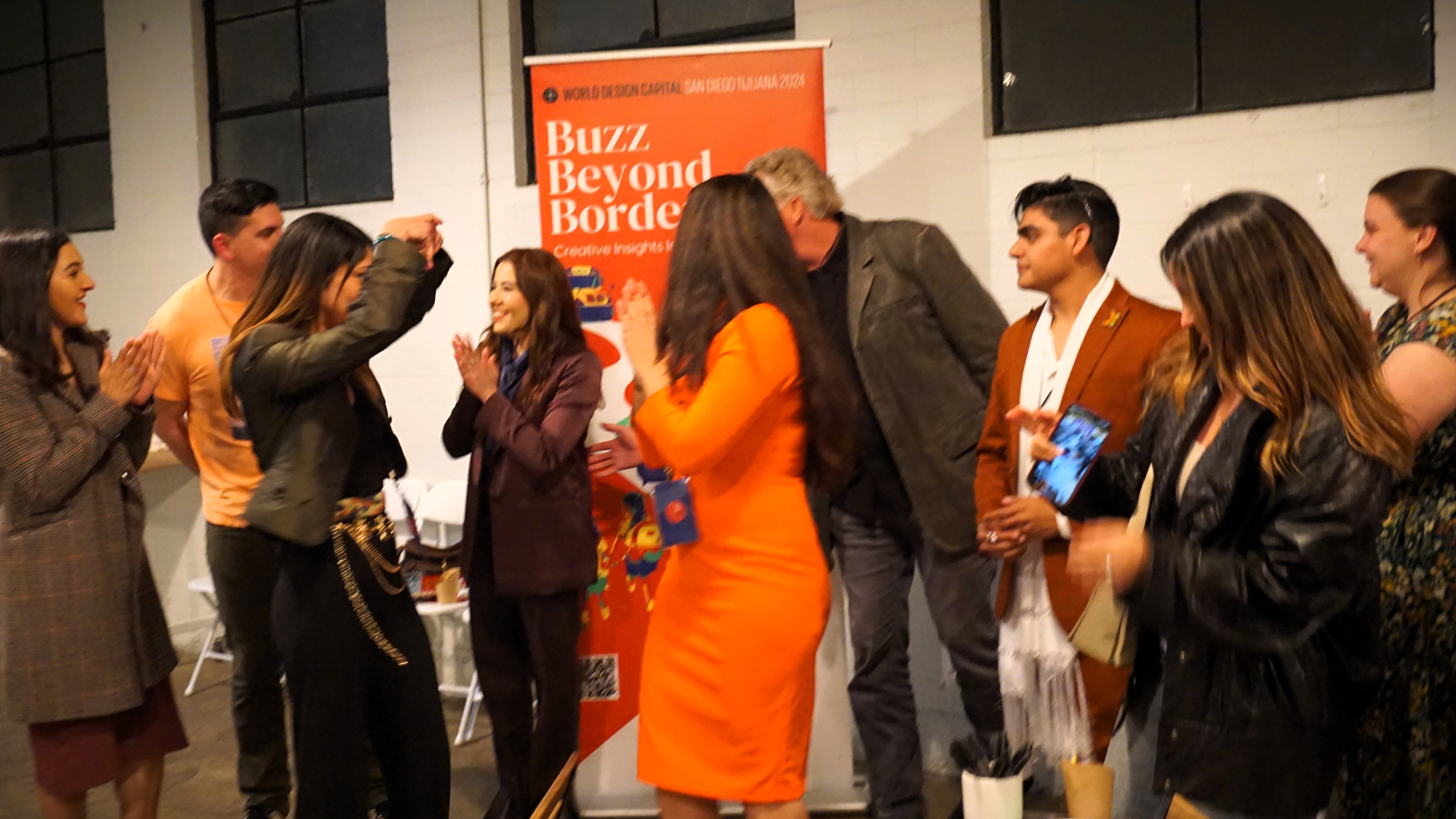
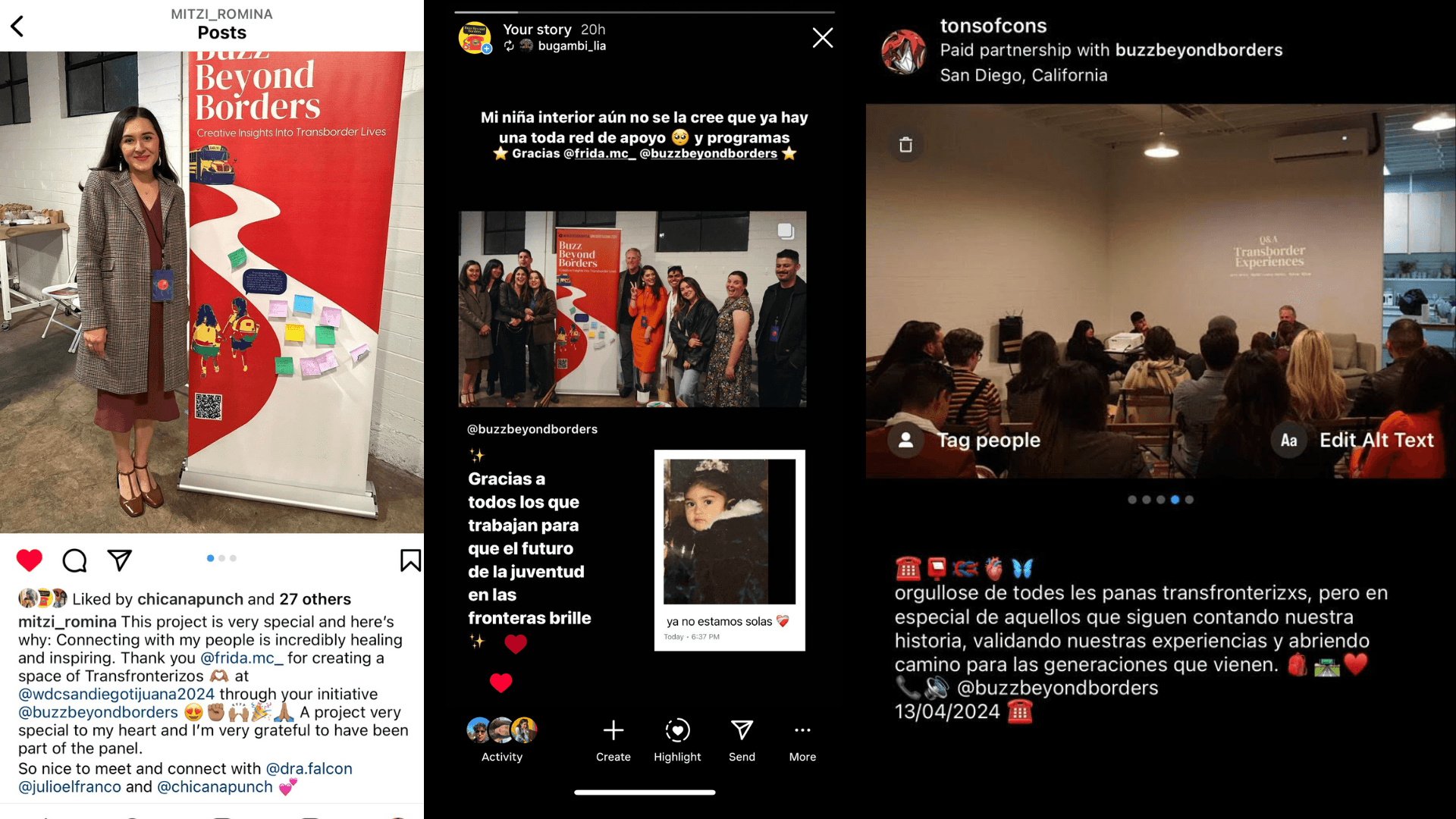
This group of individuals includes community heavy hitters from the most transited border region in the world. They were part of our first intervention at World Design Capital San Diego Tijuana, where we presented narratives from San Luis and invited voices from the SD-TJ border to record their stories through our rotary phone. We co-designed the event and led facilitation, working closely with our team to build trust and bring each of these leaders into the co-creation of the panel. Policy makers, news reporters, scholars, teachers, and advocates were moved by the outreach and, for the first time, realized they had never come together in this way. Their collective presence sparked cross-border dialogue and laid the groundwork for future policy conversations.